Limit the Turning Face
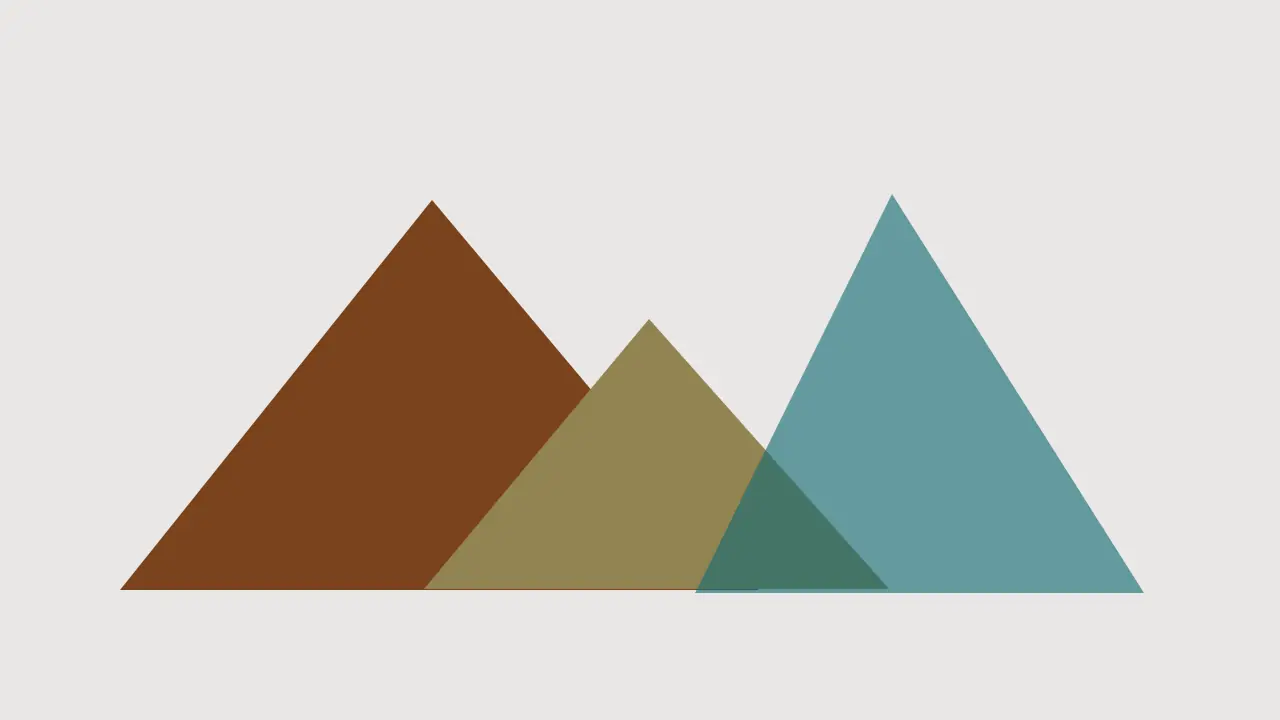
The first model of The Hinged Ridge allowed the higher flank to swing through a full circle. A player could uncover the pass by moving the face far enough away from the track. That produced a visible opening but told them very little about the smaller relationship between the two hills. We reduced the range to the angles that still left a useful crossing to explore.
Find the part of the rotation that matters
Start from the normal approach, below the face where a long edge stretches upward toward the peak. A lower face sits behind it in the first view. Turning the first piece a little separates the shoulders and makes a piece of sky visible. The sky is a helpful reference but the scene still offers no continuous track. Continue until the ground itself meets the other side of the hillside. At that position a walker can turn the next corner without changing height abruptly.
A wide rotation threw away too many of these intermediate views. In some orientations the route disappeared behind the other side of the peak. This made it easy to miss the short moment in which a shelf sat near the saddle. We split the useful interval into a clear start, the first visible gap and a last stable position. The sketch of the hinge keeps those conditions tied to where the view originated.
Keep a fixed piece in the frame
The second hill stays in place while the first one turns. Its short triangular tip must remain visible through the middle of the motion. The art pass removes a narrow overlay that had looked like the peak from the chosen approach. In the reduced model the tip occupies a quiet part of the sky. You can bring the moving edge close and judge when there is enough separation to inspect the opening.
We also made the hinge itself visible as a crease beneath the higher face. The crease fixes where the explorer can expect motion. Where it was missing, a face sometimes seemed to slide toward the player as it turned. The prototype uses a simple change in the angle of two planes to show that the shared edge stays fixed. The long profile moves in a way you can track across an intermediate position.
Let the player stop where they learned something
An earlier hinge control moved from one end to the other whenever it was selected. There was no place to inspect the first small gap. We tried a moving control with stops that can be revisited. A player can leave the face at its first interesting angle, walk toward the opening and come back to take another step. The ground below stays recognisable when you return, so the experiment begins from the setting you last chose.
The smaller interval makes the control easier to operate when the terrain is close to the edges of a narrow screen. We check it with the keyboard and keep the displayed result available after a key press. At the end of the range the same ground still needs to be inspected. The control demonstrates the state of the hinge without declaring that the crossing is now correct.
Review a reachable gap
The ridge reference shows the shape a player can compare before either side of the hillside changes. The outline study explains why an unbroken edge remains useful even when the surface material changes underneath it. In our next test a player should be able to set an intermediate position and explain what that position revealed. From there the return to the hinge can be a deliberate revision rather than a guess about which part moved earlier.